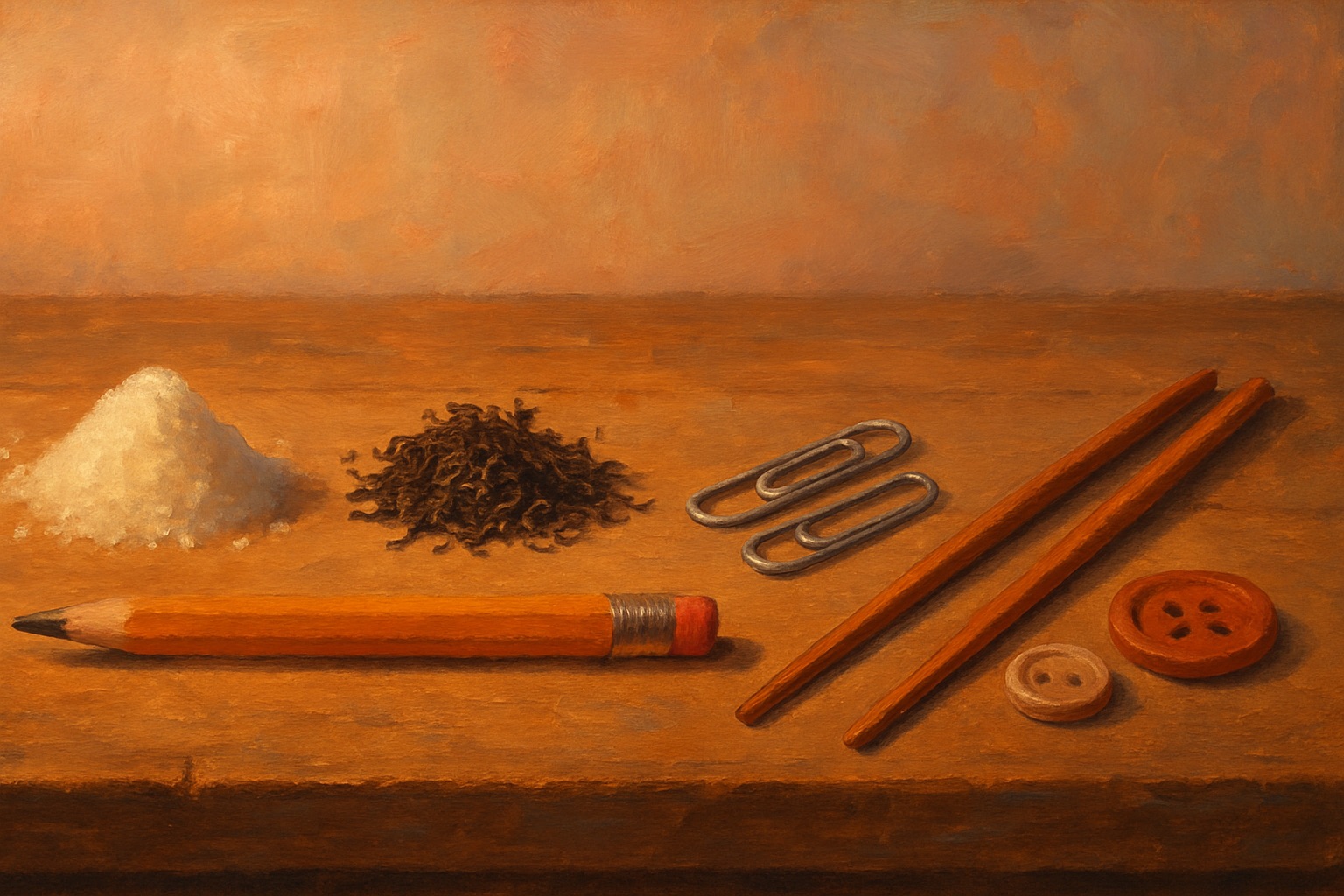
Prices feel like facts, but history keeps the receipts — and they are unhinged. Metals that crashed 99%, spices demanded at swordpoint, and continental real estate for pocket change. Thirteen price tags that make no sense until you know the story.
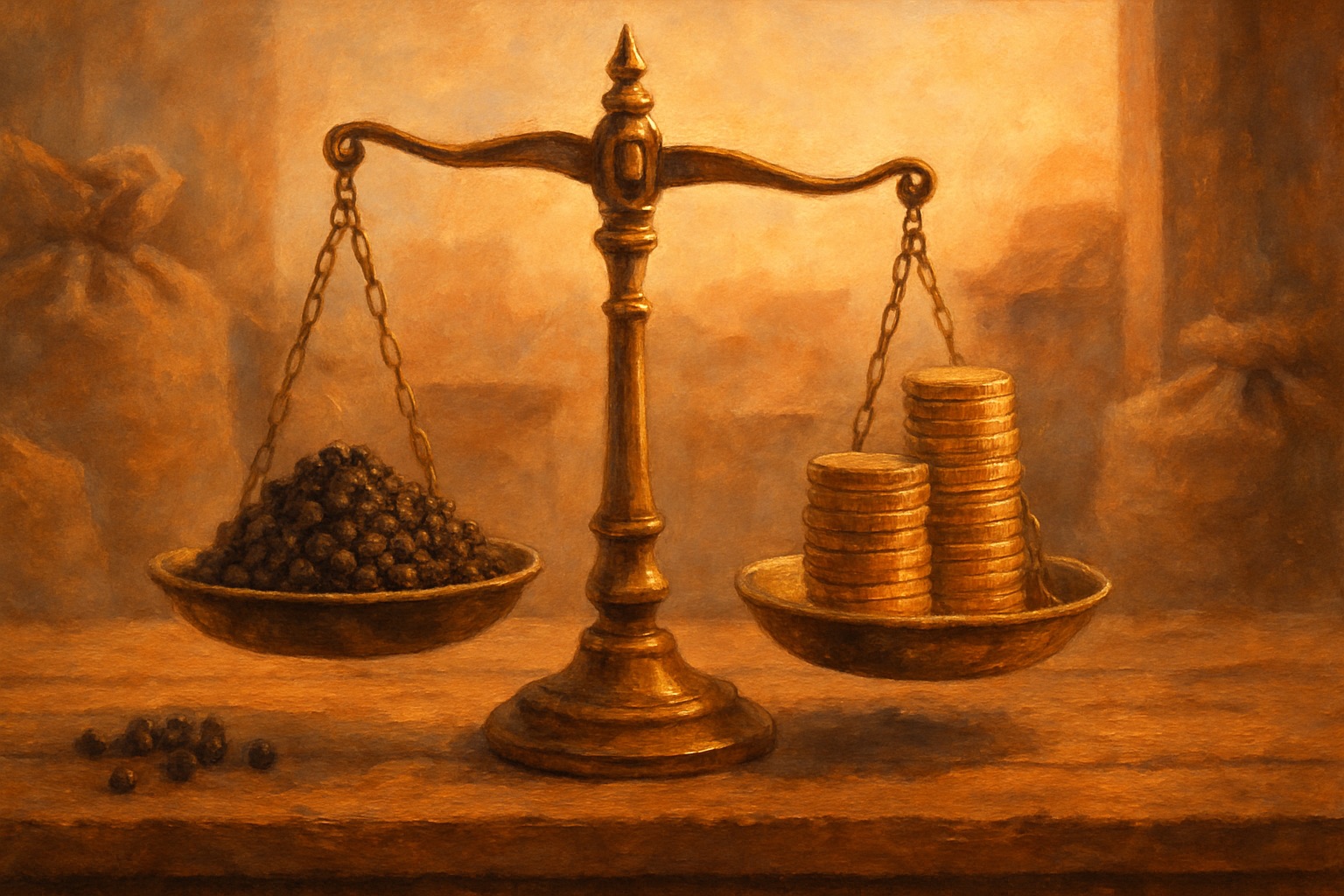
When Alaric and the Visigoths besieged Rome in 408 AD, the ransom they demanded included 5,000 pounds of gold, 30,000 pounds of silver — and 3,000 pounds of black pepper.
Medieval pepper never literally matched gold's price, whatever the cliché says — but it was valuable enough to pay rents and dowries, which is why a token payment is still called a “peppercorn rent.”
In the 1850s, aluminum was more precious than gold — the story goes that Napoleon III served his most honored guests on aluminum plates while lesser guests made do with mere gold and silver.
Then the Hall–Héroult smelting process arrived in 1886 and the price collapsed by over 99%. The most precious metal on Earth became foil for leftovers within a generation.
The Washington Monument was capped in 1884 with a 100-ounce pyramid of aluminum — then an exotic showpiece metal, priced around silver and so glamorous the casting was displayed at Tiffany's in New York before installation.
Visitors reportedly stepped over it in the store so they could say they'd jumped over the top of the Washington Monument. Two years later, the smelting breakthrough made the metal ordinary.
The first commercial cell phone, the Motorola DynaTAC 8000X, launched in 1984 at $3,995 — over $11,000 in today's money.
For that price you got roughly 30 minutes of talk time, about 10 hours of charging, and two pounds of plastic pressed against your skull. People lined up anyway.
The Louisiana Purchase in 1803 bought about 828,000 square miles from France for $15 million — under three cents an acre, before interest.
It doubled the size of the United States overnight. Napoleon needed war money; Jefferson got the middle third of a continent at garage-sale pricing.
The US bought Alaska from Russia in 1867 for $7.2 million — roughly two cents an acre — and critics mocked the deal as “Seward's Folly.”
Then came the Klondike-era gold rushes, and later Prudhoe Bay oil. The folly turned out to contain one of the great resource jackpots in history.
At the peak of Dutch tulip mania in 1637, prices quoted for a single rare bulb like the Semper Augustus rivaled the cost of a grand Amsterdam canal house.
Historians now argue the mania was smaller and less ruinous than legend claims — much of the famous chaos was exaggerated by later moralists. The quoted prices, though, were real, and really insane.
In 1626, Peter Minuit “bought” Manhattan from local Lenape people for 60 guilders' worth of trade goods — the famous “$24” figure comes from a 19th-century currency conversion.
The number is misleading in every direction: the conversion is antique, the goods weren't trinkets, and the Lenape almost certainly understood the deal as something other than a permanent land sale. History's most famous price tag is mostly myth.
Under Emperor Diocletian's price edict of 301 AD, a pound of silk dyed Tyrian purple was listed at 150,000 denarii — roughly double the listed price of a pound of gold.
The dye was milked from sea snails at a rate commonly put at tens of thousands of snails per gram, which is why purple stayed the color of emperors: it literally out-priced gold, by law.
In Tudor England, imported sugar was a luxury of the rich — and a German visitor in 1598 described Queen Elizabeth I's teeth as black, “a defect the English seem subject to, from their too great use of sugar.”
Rotten teeth briefly signaled wealth: only the rich could afford enough sugar to ruin their smile.
A Ford Model T cost about $850 at launch in 1908. By the mid-1920s, the assembly line had driven the price down to $260.
Ford cut the price by roughly 70% while paying workers a headline-making $5 a day — cheap enough that the people building the car could buy the car. That math built the American middle class's driveway.
In 1939, a one-way ticket on Pan Am's transatlantic flying boat service cost $375 — roughly $8,000 in today's money — for a journey of over a day with multiple stops.
Today the same ocean crossing can cost under $300 and takes seven hours. Air travel is one of the few things in history that got 95% cheaper while people complained more.
In 1921, radium cost about $100,000 per gram — so expensive that Marie Curie, who discovered it, could not afford a gram for her own research.
American women ran a national fundraising campaign to buy her one, and President Harding presented it at the White House. The discoverer of the most expensive substance on Earth had to be gifted a sample of it.
Honorable mention to the two-cent acre, but the aluminum cap wins: humanity crowned its tallest monument with a metal that became disposable foil within a decade. Money is made up.