Most of the rules you follow every day were never really decided — they congealed, one accident and one king at a time. Here's how twelve of them happened.
Britain drives on the left because of swords. Probably.
The leading story is that travelers kept left so their right hand — the sword hand — faced oncoming strangers, though hard proof is thin. What's certain is that Britain wrote left-hand traffic into law in 1835 and never looked back.
America drives on the right because of enormous freight wagons.
In the leading account, drivers of big multi-horse freight wagons rode the left rear horse to keep their whip hand free, and preferred oncoming traffic to pass on their left where they could judge the clearance — nudging everyone right. Post-revolutionary France standardized on the right too, and its influence spread the habit across Europe.
Clocks run clockwise because sundials did.
In the Northern Hemisphere, a sundial's shadow sweeps in the direction we now call clockwise, and early mechanical clockmakers simply copied the motion people already knew. Had clockmaking developed south of the equator, your watch would likely run the other way.
QWERTY's famous jamming story is shakier than you think.
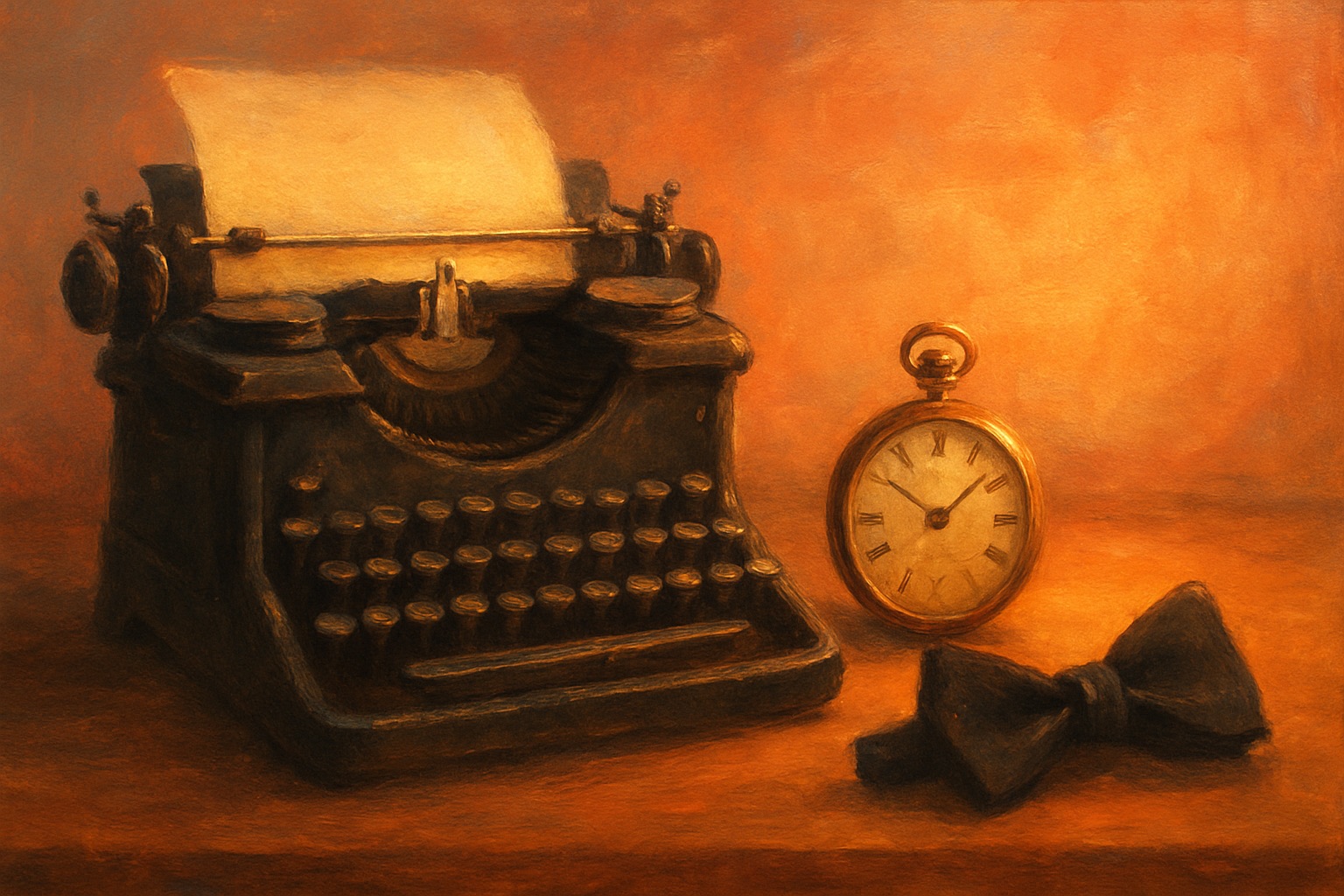
The classic tale says Christopher Sholes scattered common letter pairs to stop typewriter arms from jamming — but researchers at Kyoto University have argued the layout actually evolved to suit telegraph operators transcribing Morse code. The true origin is still debated.
The handshake may be a 2,800-year-old weapons check.
The leading story is that clasping right hands proved you weren't holding a blade. Whatever the truth, the gesture is genuinely ancient: a ninth-century BC Assyrian relief shows a Babylonian king sealing an alliance with a handshake.
The tuxedo began as loungewear for a future king.
In 1865 the Prince of Wales — the future Edward VII — had Savile Row tailor Henry Poole & Co cut him a short, tailless evening jacket for informal dinners. How it crossed to America, usually told through New York's Tuxedo Park in 1886, is a story historians still argue over.
Neckties are Croatian military surplus.
Croatian mercenaries serving in France during the Thirty Years' War wore knotted neck scarves that Parisians found irresistibly dashing. The French called the style 'la cravate' — from 'Croate' — and men have been knotting decorative fabric around their necks ever since.
Men's and women's shirts button on opposite sides — and the leading suspect is the ladies' maid.
The most-cited theory holds that wealthy women were dressed by servants, so their buttons were flipped to suit a right-handed maid facing them. It's never been proven, but the convention comfortably outlived the servants.
Your wedding ring finger was chosen because of a vein that doesn't exist.
Ancient tradition held that the 'vena amoris' ran straight from the fourth finger of the left hand to the heart, so the ring went there. Anatomy found no such special vein — the finger kept the job anyway.
Green means go because white meant disaster.
Early railroads used white for 'go' and red for 'stop' — until it became clear that a stop signal with a broken or fallen red lens simply shone white, telling trains to plow ahead. Railroads moved 'go' to green, and street traffic lights inherited the scheme.
White wedding dresses date to exactly 1840.
Brides historically just wore their best dress in whatever color they owned — until Queen Victoria married Prince Albert in white, and the resulting publicity turned one royal outfit into a Western standard.
The military salute is probably a hat-tip in a hurry.
The romantic story about knights raising their visors is popular but unproven. The leading modern account is more practical: soldiers who once doffed their hats to superiors eventually wore headgear too elaborate to remove, so the gesture shrank to a crisp touch of the brim.
Somewhere a Babylonian king is smug that his handshake outlasted his empire by nearly three thousand years.